Pura Vida!


After yesterday’s sun-up to past-sundown marathon of activities it was time for a day of much less. We woke up fairly early but just had coffee and stayed in bed until about 10:00. We then called a water taxi for a trip to the village. 

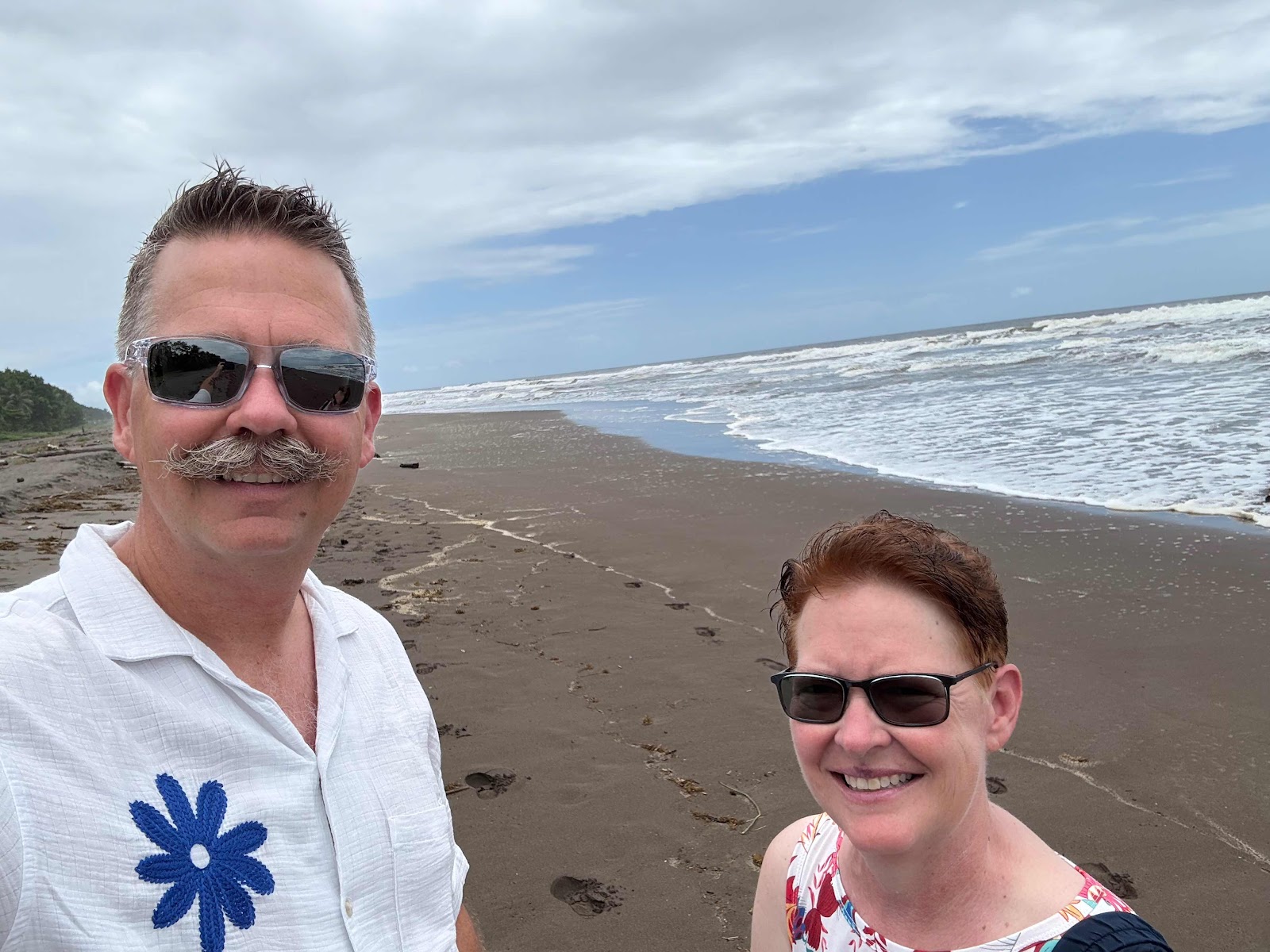
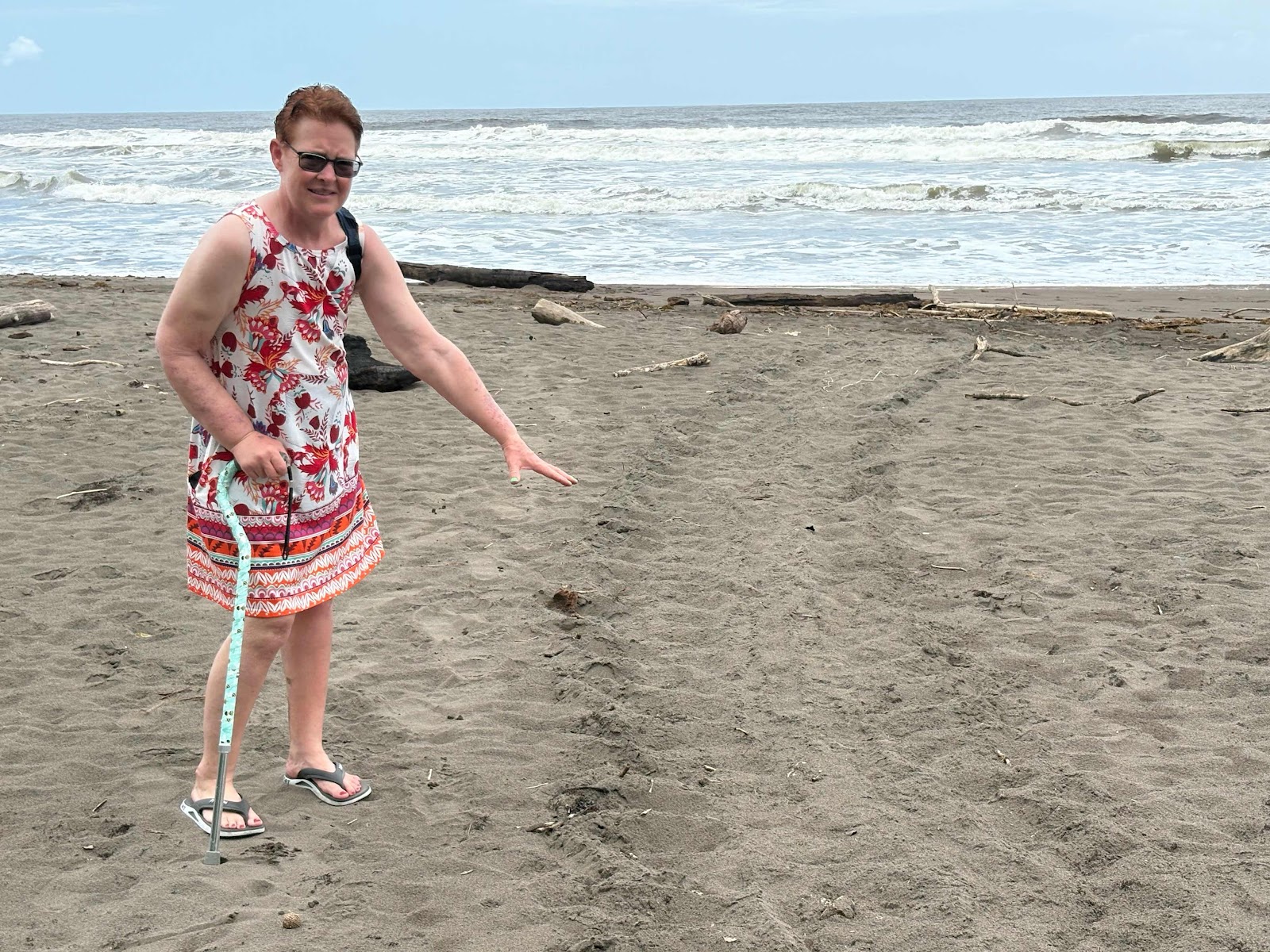
We decided to walk out on the beach where we saw the turtle laying eggs last night. It was easy to find; even her tracks back to the water were clearly visible. 


The process of nesting involves several distinct steps:
1. Crawl up the beach; Green Turtles like to get close to the vegetation, in this case, about 25 yards from the water. 
2. Clean an area with the front flippers
3. Dig the hole/nest
4. Lay the eggs
5. Cover the eggs
6. Camouflage the nest — throw sand around 
7. Return to the Sea

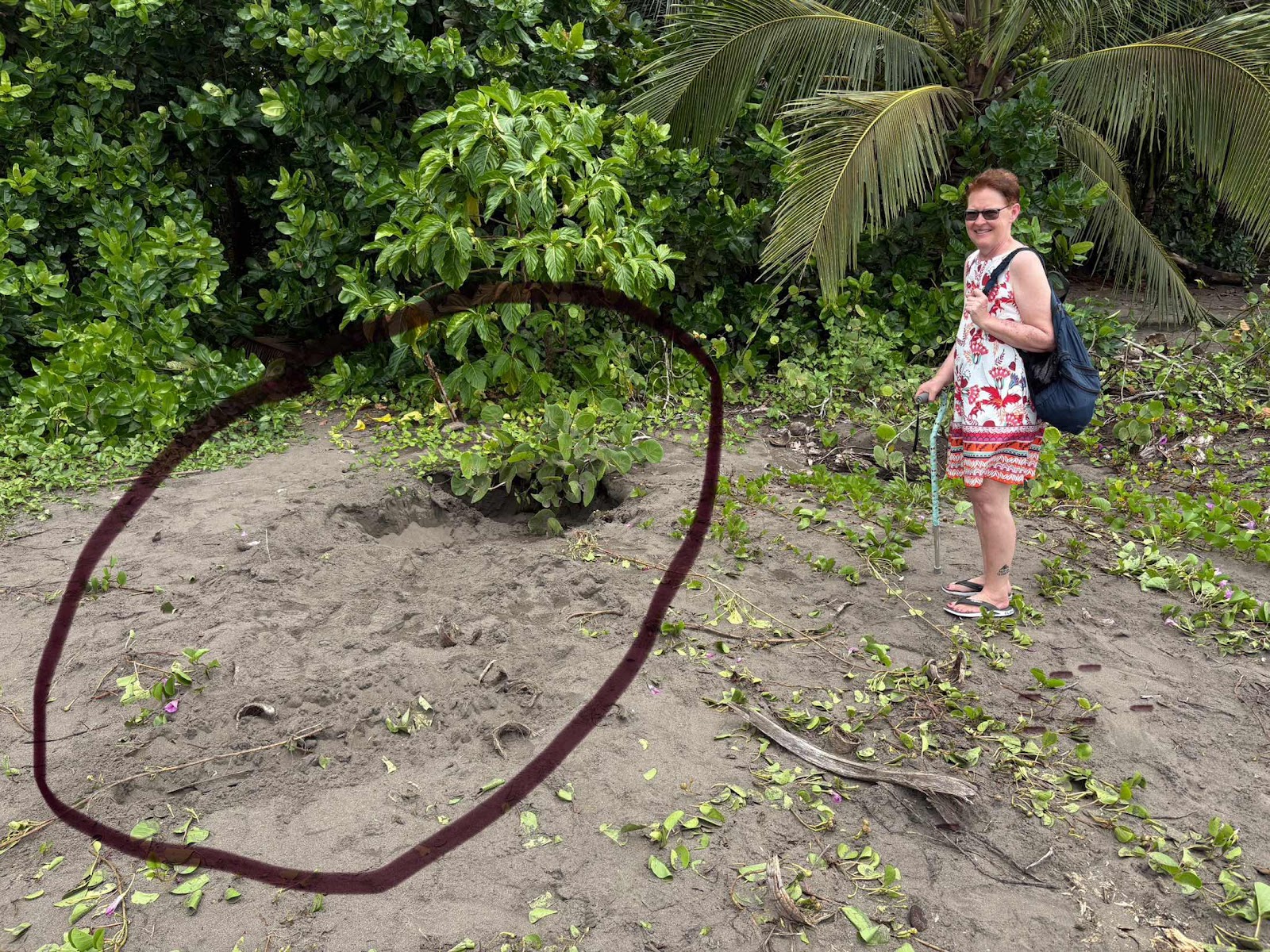
The whole process takes about two hours, 10 minutes of which is laying eggs; she lays about 120 eggs. She can do this several times per season about every three weeks. What is left when she’s done is a well covered nest and a depression next to the nest called a false nest. It’s fairly easy to spot. This is the nest and false nest of the turtle we saw last night. 


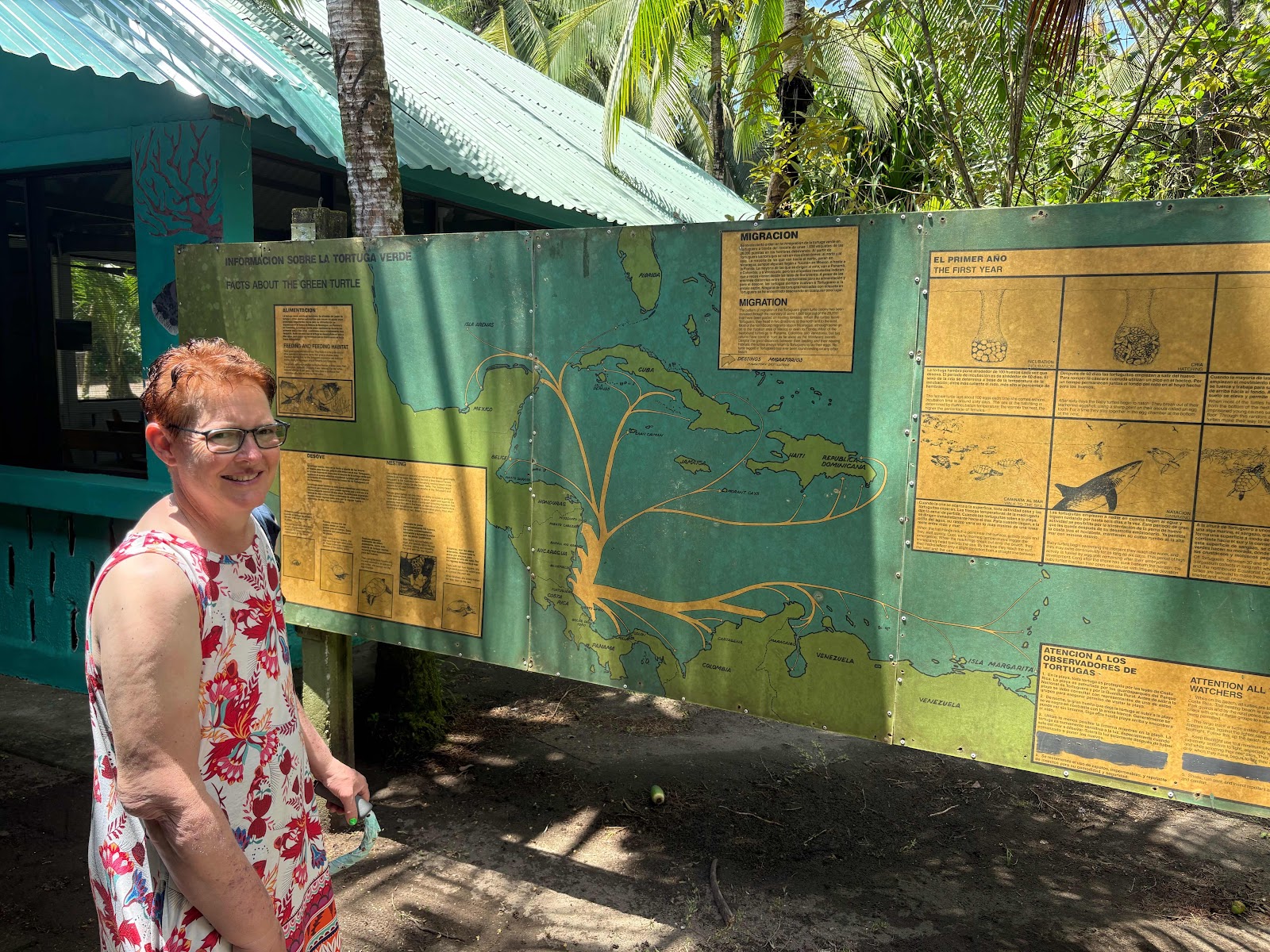
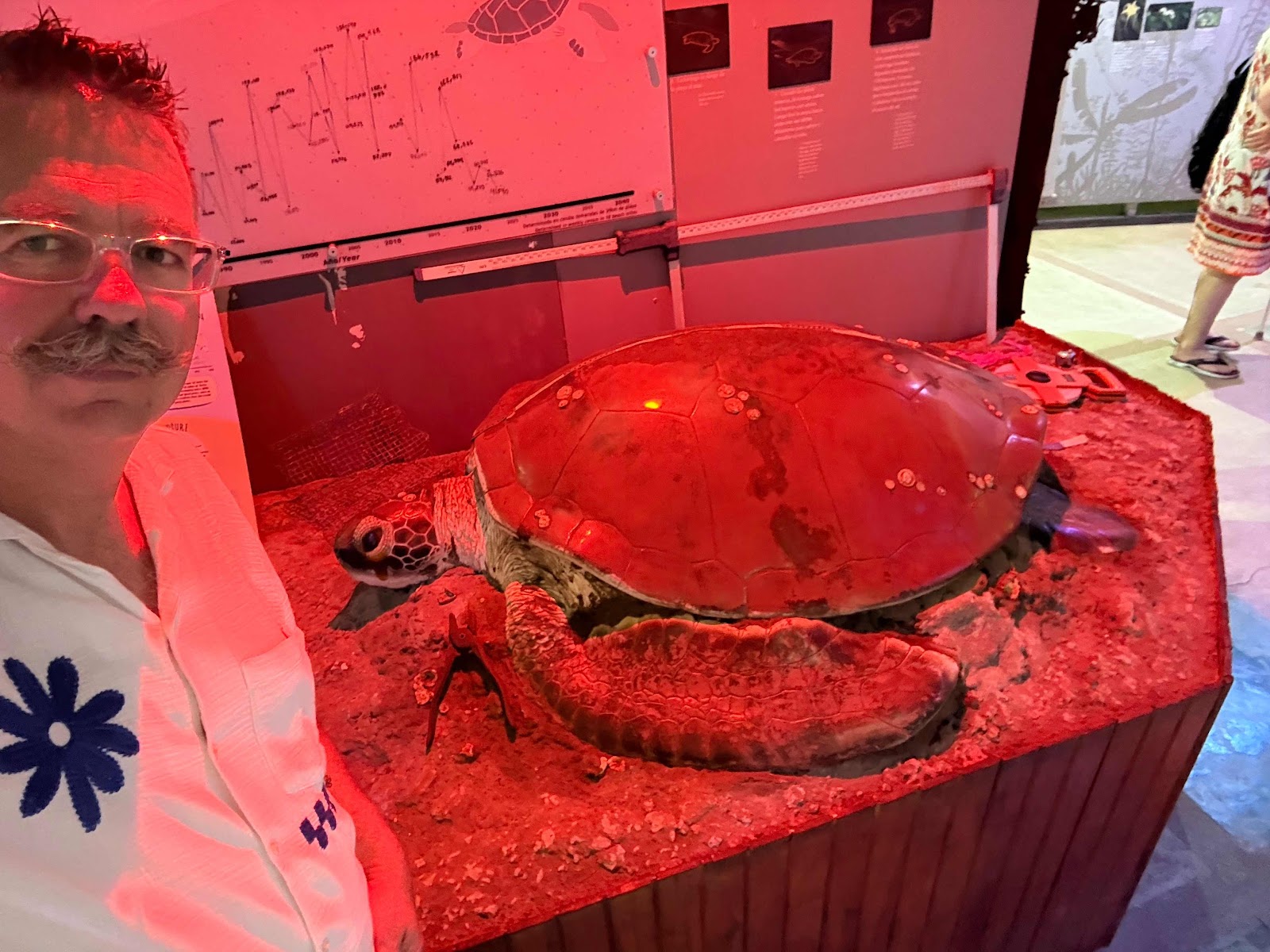
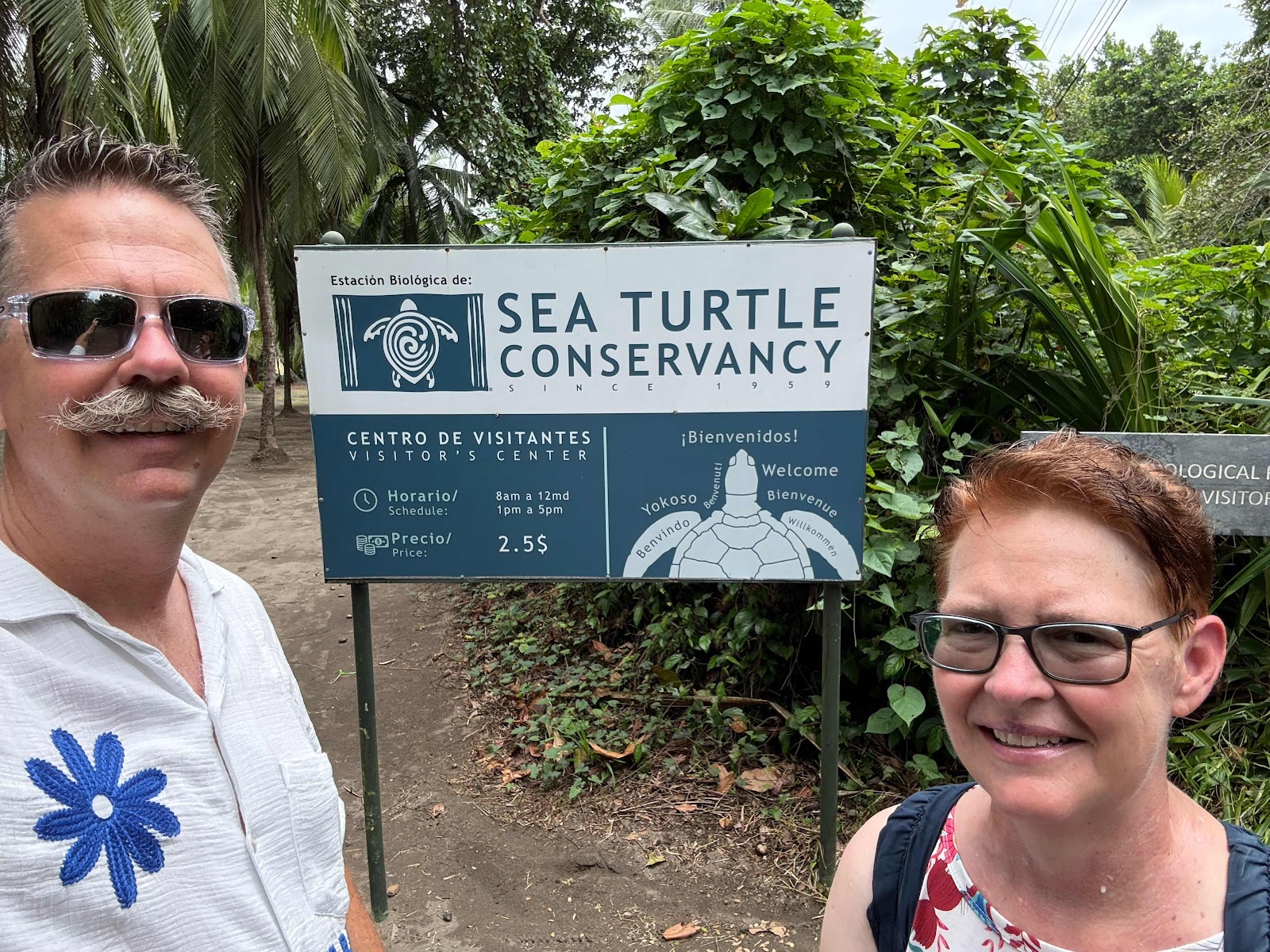
We then walked up the beach a little bit, and on a footpath further north to the Sea Turtle Conservancy Visitor Center — they have a small museum and a short video to watch. It was small but very well done. 


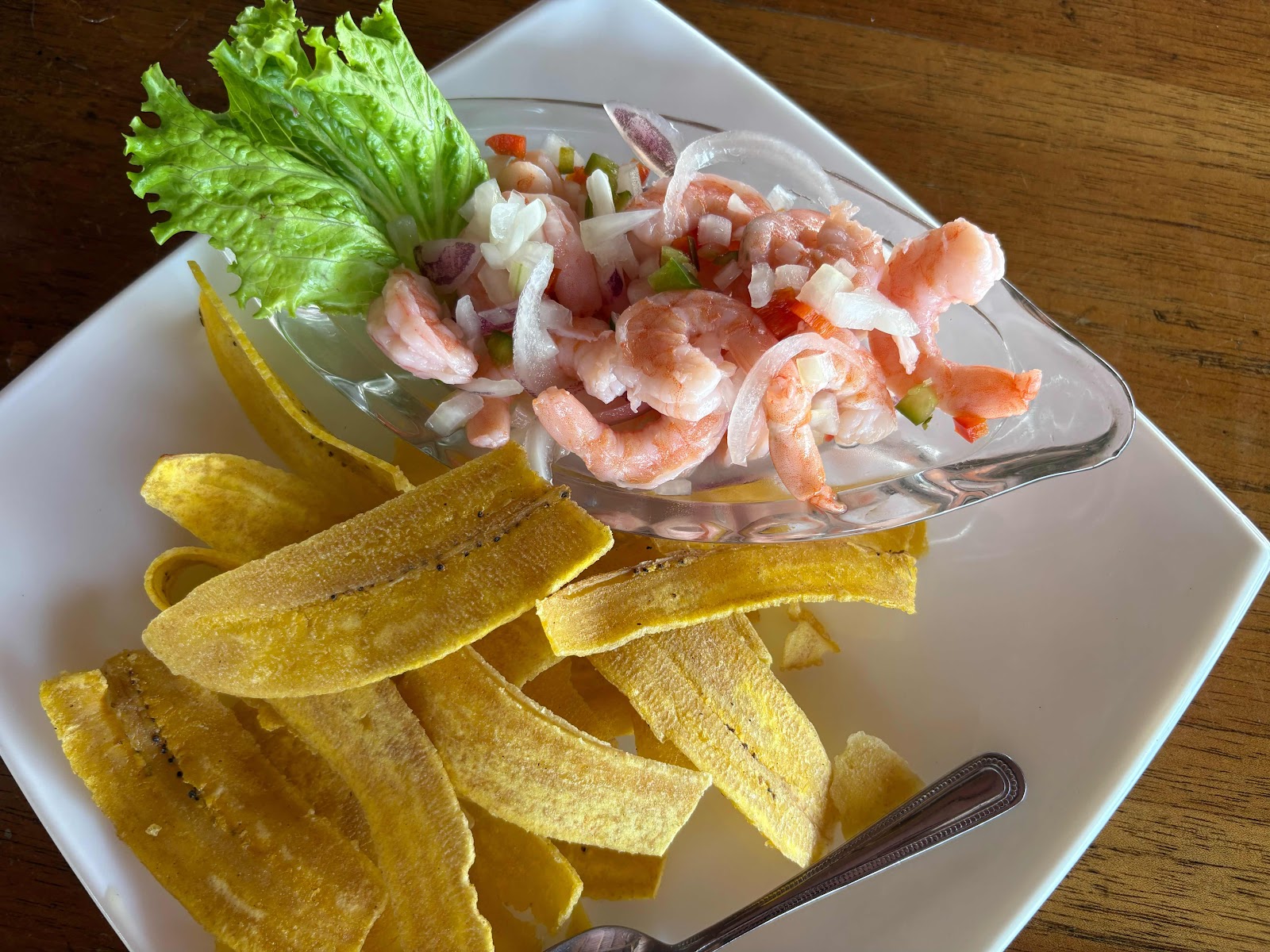
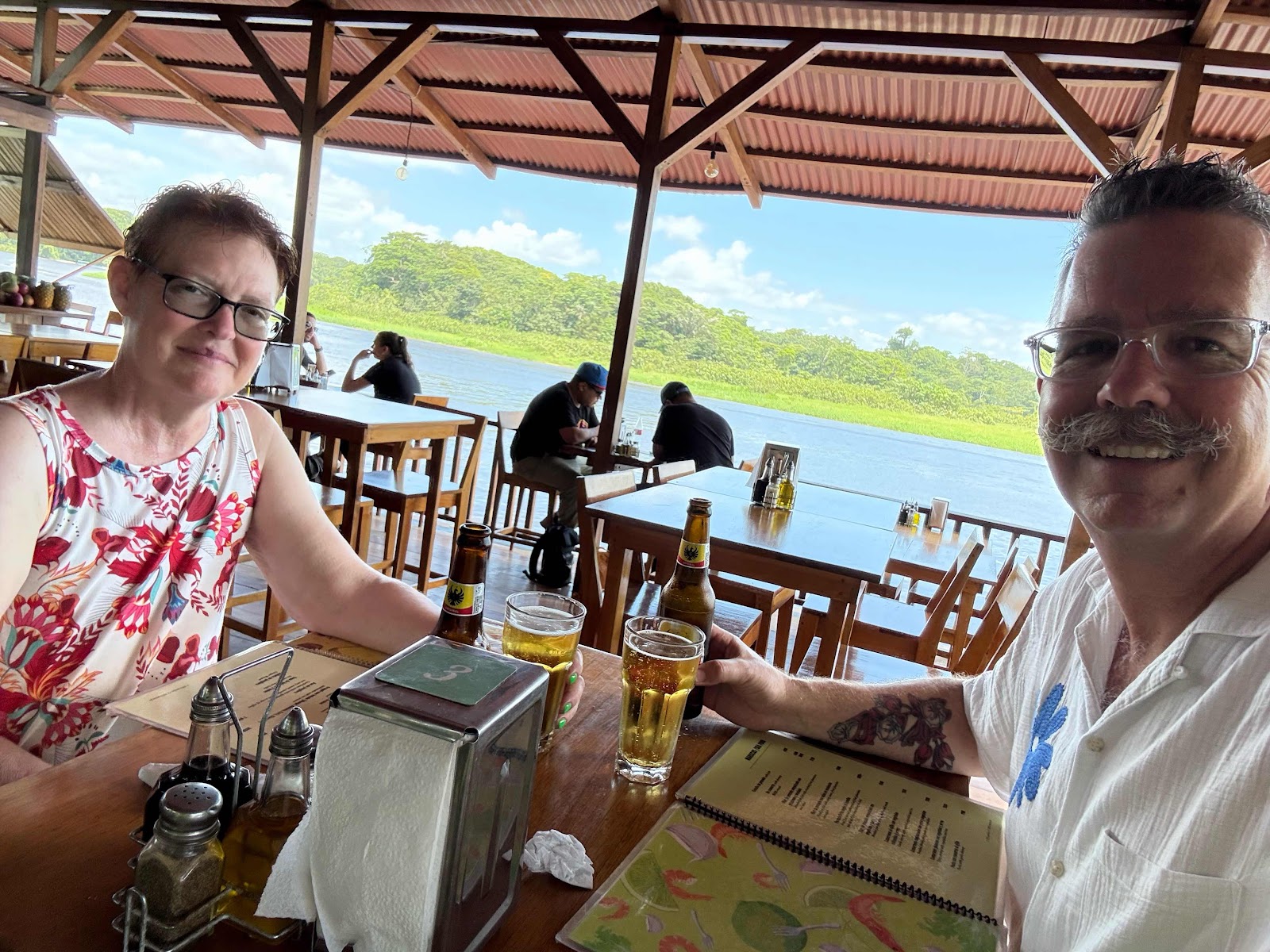
We did some souvenir shopping on our way to find a place to have lunch. We ended up eating at El Patio — super delicious; the shrimp ceviche was great!  Those are fried plantain chips … 🤤


We then caught a water taxi back to Pachira for an afternoon at the spa — massage, steam room, then hot tub!
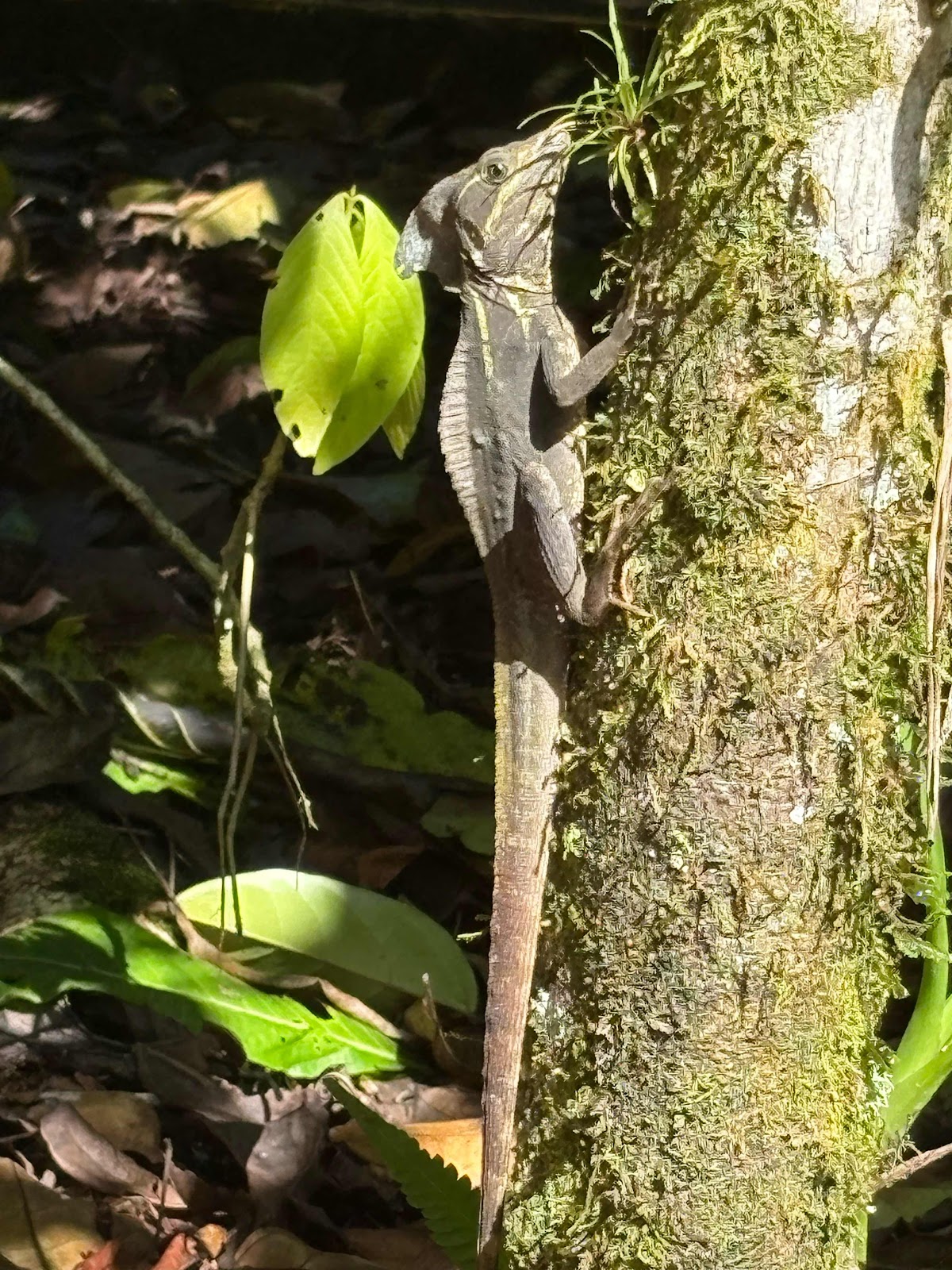
On our way back to our room we saw a Brown Jesus Christ lizard … not to be confused with the green one we saw yesterday. 


For dinner, we decided to take a water taxi back over to the village of Tortugero to have dinner. The lodge food is pretty good, but it’s kind of the same all the time; it’s not bad at all, but we just wanted to have more local. Our taxi captain recommended a restaurant called Mi Niño, so we tried it. 
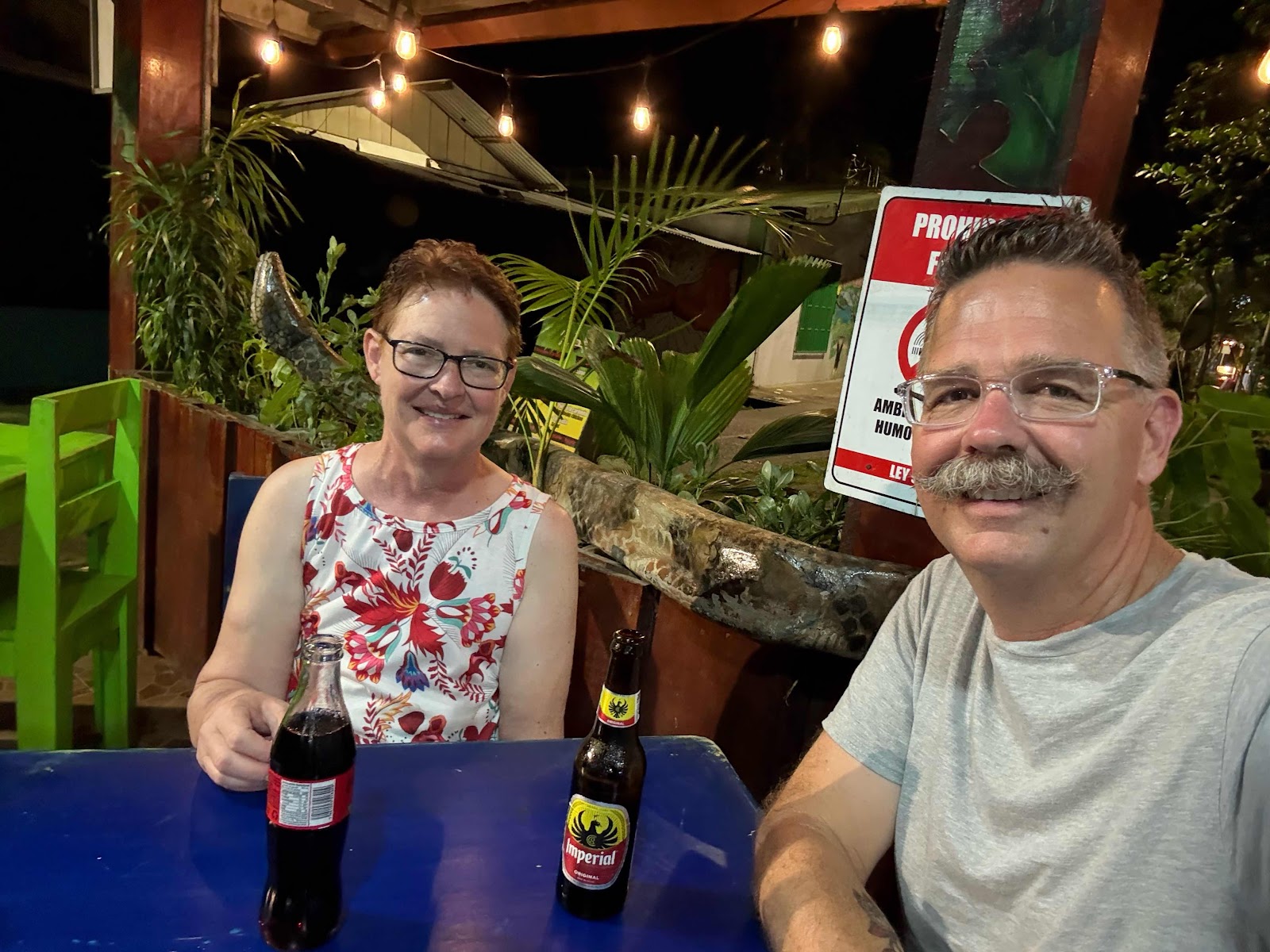


We both had the same entrée with one exception, we had the Caribbean chicken and Kristi had a side of patacones while Jim had white rice. It was very good. 
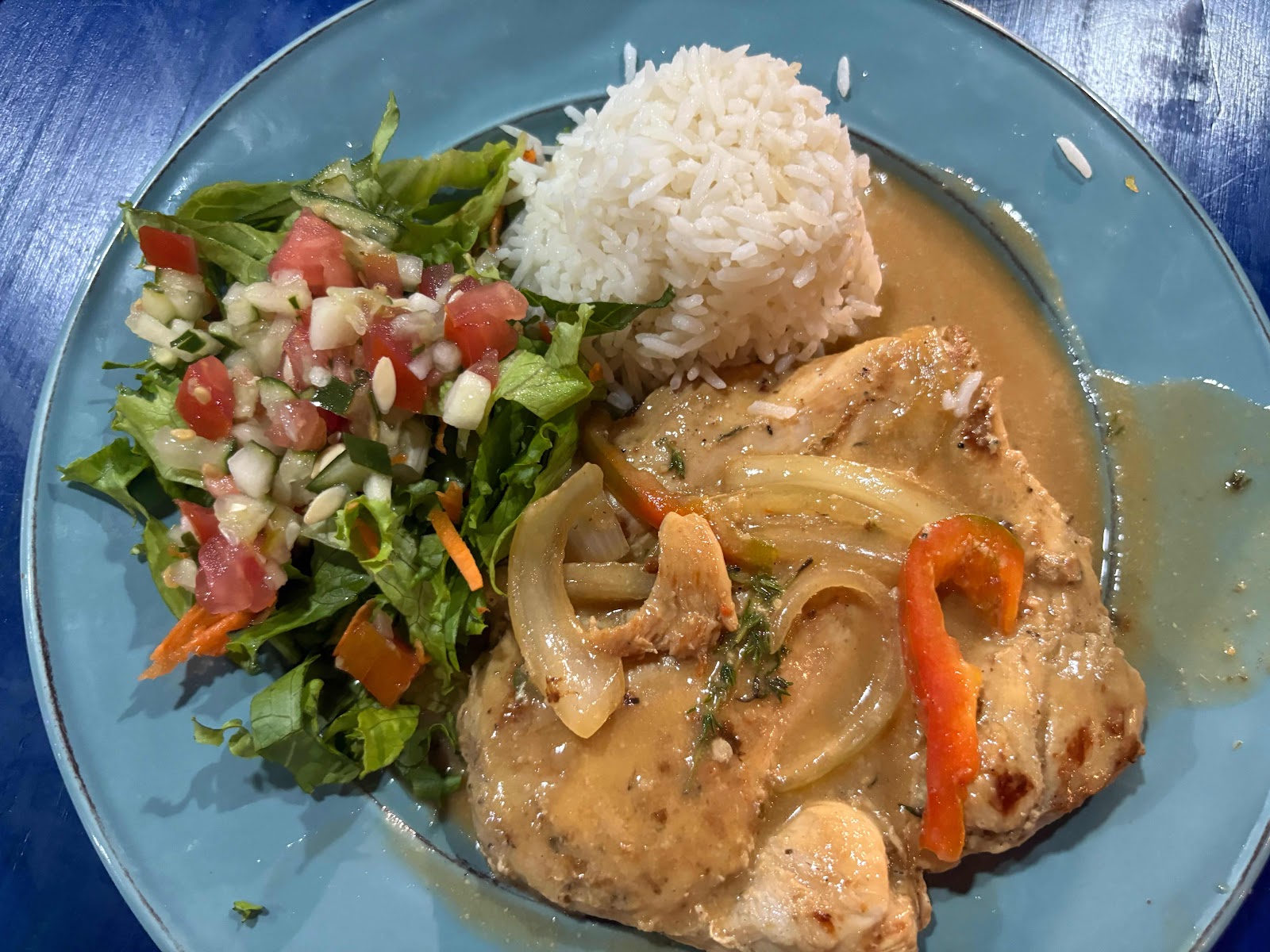


Now that we’ve been over to the village several times in the daytime and in the night, we really like it. It’s very quaint and seems very safe. It’s really like a different world. We noticed that when we were shopping, none of the shop owners were calling us in to shop like you might find that other very touristy places. Well, this is a touristy place, but It doesn’t feel touristy at all. The locals kind of ignore the tourists except when you eat at the restaurant or buy something at the shop. They treat you like a normal person, like you’re at home. It’s a pretty unique experience for us.

Jim figured out one of the reasons why he likes tropical places so much … everybody wears flip-flops, shorts, and a t-shirt 24/7. 


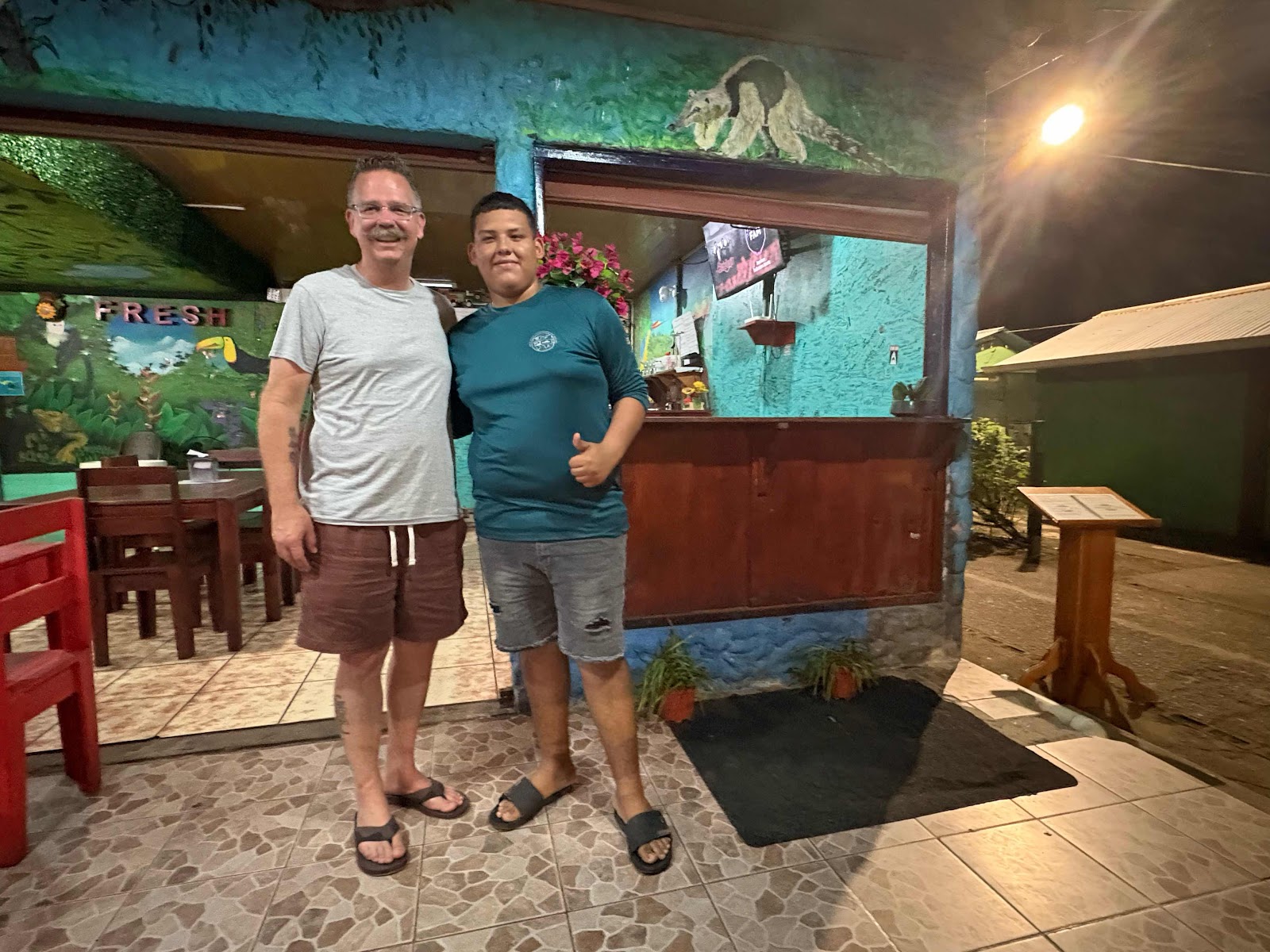
This is Matthew who served us at Mi Niño. 

We walked around the village just a little bit and then decided to head back to the lodge. We know we always say this, but we would definitely come back here. There is the possibility to come back and volunteer with the turtle conservancy and help them measure turtles… Kristi would really like to do that… Jim would help too, as long as he got to wear flip-flops, shorts and a t-shirt. 


In case you were wondering about the phrase Pura Vida —

In Costa Rica, the phrase “Pura Vida” (pronounced poo-rah VEE-dah) is much more than just words — it’s a national expression of the country’s identity and outlook on life.

Literal Translation:

“Pura Vida” means “pure life” in Spanish.

What It Actually Means in Costa Rica:

Costa Ricans (called Ticos) use Pura Vida in all kinds of situations, and it expresses:

  • Optimism
  • Gratitude
  • Simplicity
  • Joy in the moment
  • A relaxed, peaceful approach to life

How It’s Used in Conversation:

Situation

Use of “Pura Vida”

As a greeting

“¡Pura vida!” (like “Hello!” or “Hey!”)

As a farewell

“Chao, pura vida.” (“Bye, take care.”)

As a response to “How are you?”

“¿Cómo estás?” → “¡Pura vida!” (like saying “I’m great!”)

To express thanks or appreciation

“Gracias.” → “Pura vida.” (“You’re welcome / no problem.”)

To reflect a good vibe or attitude

“That was a great meal!” → “Sí, pura vida.”

What It Represents:

Pura Vida is a mindset — it reflects Costa Rica’s emphasis on happiness, connection to nature, and taking life in stride. It’s part of why Costa Rica consistently ranks among the happiest countries in the world.
Comments

Popular posts from this blog

Reunion Finale Dinner

Arrival in Panama

Welcome to the Jungle